Spectrum Analysers
Spectrum analysers are essential tools in the electronics industry, commonly used to analyse the frequency spectrum of radio frequency (RF) and audio signals, often alongside instruments like the frequency counter. By examining a signal in the frequency domain, these instruments reveal key characteristics of the signal itself and the performance of the circuit generating it.
Capable of performing a wide range of measurements, spectrum analysers are indispensable in RF design, development and test laboratories. They also play a critical role in specialised field service applications, where accurate signal analysis is vital.
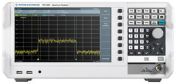
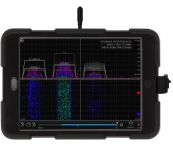
A spectrum analyser displays signal amplitude on the vertical axis and frequency on the horizontal axis, providing a clear visual representation of how a signal behaves across the frequency spectrum. This makes them a fundamental piece of test equipment for the design, testing, and maintenance of RF systems such as RF transmitters.
Types of Spectrum Analysers
Spectrum analysers come in various types, each suited to specific applications and performance needs. Below are the main categories:
Swept Spectrum Analysers
Swept spectrum analysers work by sweeping a narrowband filter across a specified frequency range to measure signal strength at each point. This traditional and widely used type provides a clear view of signal amplitudes across a band. They are ideal for general-purpose RF testing and offer a good balance between cost and performance.
Fast Fourier Transform, FFT Analysers
FFT analysers digitise the incoming signal and use mathematical algorithms to transform it into the frequency domain. These digital analysers offer faster measurements and better resolution but are more complex and costly. They are well-suited for laboratory environments where speed and precision are critical.
Real-time Analysers
A specialised form of FFT analyser, real-time spectrum analysers use powerful processors and large memory buffers to capture and process signals continuously. This allows them to detect short-duration, transient events that traditional analysers may miss. They are ideal for applications like radar, wireless communications, and electronic warfare.
Audio Spectrum Analyser
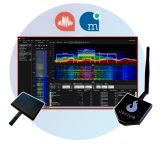
Designed specifically for low-frequency signals in the audio range, these spectrum analysers are simpler and more affordable. They often use software-based processing and can run on standard PCs with minimal additional hardware. These are widely used in music production, acoustic analysis, and testing for consumer electronics.
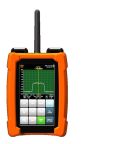
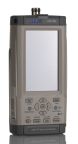
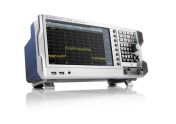
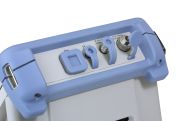
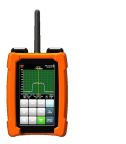
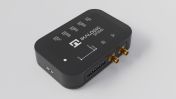
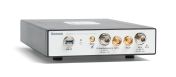
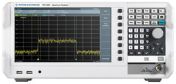
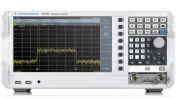
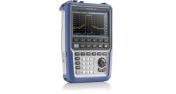
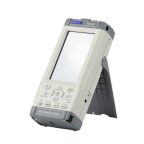
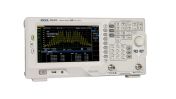
Spectrum analysers tend to fall into 4 form factors:
- Benchtop - can be plugged into AC power, which generally means in a lab environment or production/manufacturing area.
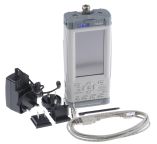
- Portable – can be taken outside to make measurements or simply carried while in use.
- Handheld - needs to be very light and small.
- Networked - ability to connect the analyser to a network.
How a Spectrum Analyser Works?
A spectrum analyser measures and displays the amplitude of signals as a function of frequency, providing insights into the frequency content of electrical signals. It operates by converting the input signal into a lower intermediate frequency (IF) through a process called heterodyning. This involves mixing the input signal with a signal from a local oscillator.
The resulting IF signal is then filtered, amplified, and detected. The amplitude of the detected signal is displayed on a screen, typically with frequency on the horizontal axis and amplitude on the vertical axis. This process allows users to analyse the spectral composition of signals, identifying various frequency components and their amplitudes.
Applications of Spectrum Analysers
Below are some key applications of spectrum analysers:
Telecommunications
In telecommunications, spectrum analysers are used to monitor and troubleshoot signals within communication networks.
Electronics Manufacturing
In electronics manufacturing, spectrum analysers are indispensable for testing and validating components such as amplifiers, oscillators, and filters.
Aerospace and Defence
The aerospace and defence sectors rely on spectrum analysers for developing and testing communication, radar, and electronic warfare systems.
Automotive Industry
In the automotive industry, spectrum analysers are used to test in-vehicle communication systems.
Broadcasting
Broadcasting companies employ spectrum analysers to ensure that radio and television signals are transmitted within allocated frequency bands and at appropriate power levels.
How to Choose the Right Spectrum Analyser?
Selecting the appropriate spectrum analyser depends on your specific application requirements. Consider the following factors:
- Choose an analyser with a frequency range that encompasses the signals you intend to measure.
- A smaller Resolution Bandwidth (RBW) enables better frequency resolution, allowing for the detection of closely spaced signals. However, this may increase measurement time.
- A wide dynamic range is essential for accurately measuring both weak and strong signals without distortion.
- If field measurements are necessary, consider a portable or handheld spectrum analyser. These models offer mobility without compromising essential features.
- An intuitive user interface, featuring elements such as touchscreens and customisable displays, can significantly enhance usability and efficiency.
Spectrum Analyser Tips
To get the most accurate and reliable results from your spectrum analyser, it’s important to follow best practices and avoid common pitfalls.
Beware Input Level
Always check input levels before connecting a high-power signal to a spectrum analyser. Exceeding the maximum input rating can cause permanent damage to the input mixer or attenuator. Use external attenuators if needed to protect the instrument.
Determine if Spurs Are Real
Spurious signals may be actual signal artifacts or internal measurement anomalies. To verify, adjust frequency span or resolution bandwidth, true spurs will remain consistent, while artifacts often change or disappear.
Wait for Self-Alignment
When first switched on, allow the spectrum analyser to complete its self-alignment and calibration routine. Skipping this step can lead to inaccurate or unstable measurements.
How to Order Spectrum Analysers from RS?
RS is a trusted supplier of high-quality spectrum analysers in Hong Kong, offering top brands like Rohde & Schwarz, Aim-TTi, and Tempo at competitive prices. You can place your order online for fast delivery or collection, or by phone.
How Does the Delivery of Spectrum Analysers Work at RS Hong Kong?
We provide flexible delivery options for spectrum analysers to suit your needs, including same-day and next-day services. Orders over $250 qualify for free delivery. For full details, please refer to our delivery information page.