DIN Rails
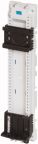
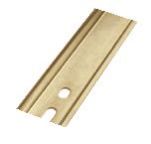
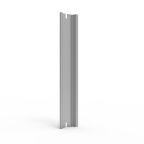
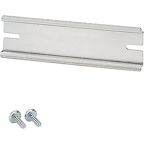
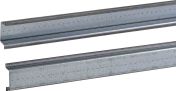
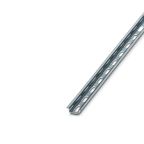
DIN rails are a standardised metal rail system commonly used for mounting industrial control equipment within electrical cabinets, PCL racks, and enclosures.
These robust metal DIN rails provide a secure and organised mounting solution for various electrical components, including circuit breakers, terminal blocks, and power supplies.
By simply clipping components onto the rail, installation is streamlined and made more efficient. Numerous types of DIN rail mounts are available, with many conforming to European (EN) and international (IEC) standards, ensuring compatibility with a wide array of control equipment.
Types of DIN Rails
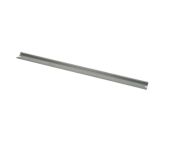
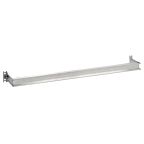
DIN rails are available in various types, differing in length, size, and profile to suit a wide range of mounting applications.
Top Hat DIN Rail(EN 50022)
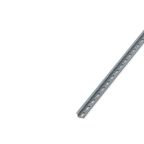
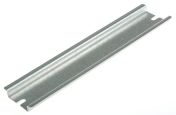
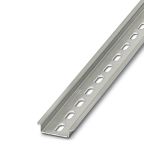
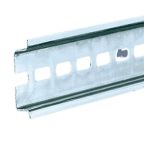
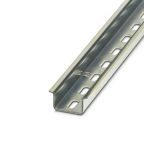
This 35mm wide rail, also known as TS35 rail, is a widely adopted standard. The EN 50022 specification outlines both 7.5 mm and 15 mm deep versions, available in both slotted and unslotted forms. The characteristic ‘top hat’ profile of this DIN rail provides a stable and easily mountable base for electrical components.
Miniature Top Hat DIN Rail (EN 50045)
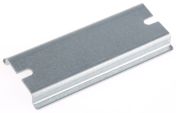
Also referred to as TS15 rail, this is a smaller variant of the standard top hat DIN rail, measuring 15 mm in width and 5.5 mm in depth. Miniature DIN rails are ideal for compact applications where space is limited, offering a secure mounting solution for smaller components.
C Section DIN Rail
The C section DIN rail, also called a TS-32 rail, features a symmetrical C-shaped cross-section. This robust design provides a secure mounting surface for various electrical components.
Popular types include C20, C30, C40, and C50, where the number corresponds to the product's height in millimetres. These are often chosen for their inherent strength in industrial DIN rail setups.
G Section DIN Rail (EN 50035)
This DIN rail mounting option features a distinctive G-shaped cross-section with a curved, asymmetrical appearance. G section DIN rails are specifically designed to provide robust support and are often utilised where particular structural integrity is required for mounted components due to their unique profile.
How DIN Rail Mounting Works
DIN rails come in standard sizes, such as the popular 35mm DIN rail, providing a universal mounting solution for electrical and industrial components. The metal rails are typically crafted from perforated cold-rolled carbon steel, featuring a zinc-plated or chromated finish to resist galvanic corrosion.
Components simply clip or slide onto the rail, offering a secure and organised installation. This versatile system allows manufacturers to design equipment without needing specific mounting holes for each part, streamlining assembly. It saves time, optimises space within control cabinets, and ensures secure wiring.
Benefits of Using DIN Rails
DIN rails deliver a range of industrial and electrical benefits that streamline installation and enhance system reliability.
- Durability: Constructed from robust materials, DIN rails provide exceptional durability. For example, steel DIN rails can withstand harsh industrial environments, offering long-lasting support for mounted components.
- Modularity: The modular design of DIN rail mounts allows for flexible and scalable system configurations. Components can be easily added, removed, or rearranged, facilitating future expansion or modifications without extensive re-wiring.
- Easy installation: Components simply clip onto the DIN rail, significantly reducing installation time and complexity compared to traditional screw-in mounting. This simplifies assembly processes in control panels and enclosures.
- Cable management: The structured mounting provided by DIN rails aids in better cable management. Wires can be neatly routed and secured, leading to a cleaner, more organised setup and improved troubleshooting.
Common Applications of DIN Rails
DIN rails provide a standardised and efficient mounting solution that is indispensable across industrial and electrical applications.
DIN Rail Terminal Blocks
DIN rails are commonly used as a secure mounting base for terminal blocks, enabling organised wire connections within control cabinets. The modularity of a slotted DIN rail facilitates easy addition or removal of individual terminal blocks.
Automation and Control Devices
In automation and control systems, DIN rails offer a streamlined method for installing various devices like sensors, actuators, and motor starters. This helps create a neat and accessible layout in industrial control panels, simplifying maintenance.
Power Supplies
Many industrial power supplies are designed for DIN rail mounting. This method allows for efficient installation and robust support for power supply units within enclosures, ensuring a reliable power source for critical components.
Robotics
DIN rails are integral to robotics, providing a structured way to mount control modules, motor drivers, and other electronic components. Their use aids in creating compact and highly organised control systems for robotic arms and machinery.
Plug-In Relays
Plug-in relays frequently utilise DIN rail mounts for quick and secure installation. This enables rapid replacement of relays without needing to rewire individual connections during maintenance and troubleshooting.
Panel Meters
DIN rails offer a convenient mounting solution for various panel meters, such as ammeters, voltmeters, and energy meters. This allows for clear organisation and easy visibility of vital operational parameters within control panels.
I/O Devices
Input/Output (I/O) devices, crucial for connecting industrial processes to control systems, often mount directly onto DIN rails. This facilitates efficient wiring and compact arrangement of I/O modules, optimising space in automation cabinets.
PLCs
As the ‘brains’ of many automated systems, Programmable Logic Controllers (PLCs) are frequently DIN rail mounted. This provides a stable and organised foundation for the PLC unit and its expansion modules, simplifying system integration and debugging.
Contactors
Industrial contactors, used for switching high-power electrical circuits, are often secured onto DIN rails. This ensures a robust mechanical mounting and neat electrical connections within motor control centres and other power distribution applications.
How to Choose the Right DIN Rail
Selecting the appropriate DIN rail is essential for ensuring a secure and organised electrical enclosure. Consider these factors when picking a DIN rail to match your needs:
- DIN rail type: Options like top hat DIN rails and slotted DIN rails offer different mounting flexibility. Choose a type that aligns with your components' attachment mechanisms and installation preferences.
- Material: Select your DIN rail material based on load and environmental conditions. For instance, steel DIN rails provide robust support for heavy loads and durability, while aluminium options offer a lightweight, corrosion-resistant alternative.
- Size: Consider the length and profile of your DIN rail to accommodate all components within your enclosure. Proper sizing prevents overcrowding and allows for future expansion.
- Intended application: Industrial uses may demand more robust industrial DIN rail materials and features for harsh environments, whereas commercial applications might prioritise ease of installation and cost-effectiveness.
Buy DIN Rails from RS Hong Kong
RS Hong Kong is a trusted supplier and distributor of electrical enclosures and racking components, offering a comprehensive range of DIN rails in various types and materials. Our items are sourced from reputable brands like Phoenix Contact, Schneider Electric, Siemens, and Fibox, ensuring high-quality options for every customer.
Beyond electrical DIN rails, we also provide a wide array of other electrical equipment and components, such as cabinet plinths and cable protectors, providing a one-stop shop for diverse project needs.
Explore our user-friendly online site for the full range of options and get your items shipped directly to your door. Furthermore, with our flexible delivery options, you can receive your products precisely when needed.
For comprehensive details on delivery times and fees, please consult our delivery information page.