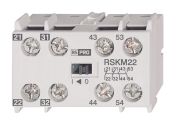
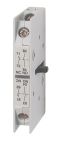
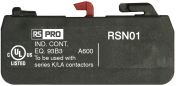
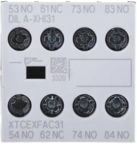
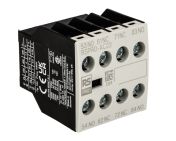
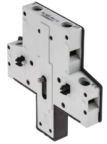
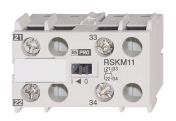
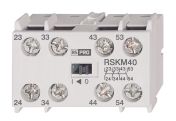
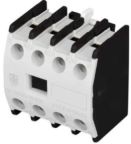
Auxiliary Contacts
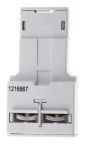
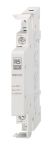
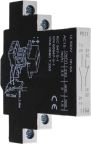
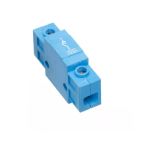
Auxiliary contacts—also known as auxiliary contactors—are essential components in industrial electrical control systems. Designed to work in tandem with primary switching devices like contactors, circuit breakers, and relays, these secondary contacts provide mirrored status feedback and enable advanced control functions.
They are available in a wide range of contact configurations (e.g. auxiliary contact NO NC) and mounting styles. Whether integrated into a 3 pole contactor with auxiliary contacts or attached as an add-on, they play a vital role in system monitoring, automation, and safety.
Benefits Of Using Auxiliary Contacts
For businesses focused on control reliability and streamlined operations, integrating auxiliary contacts offers several operational advantages:
- Improved Control Flexibility: They allow additional switching points without adding separate relays, which reduces circuit complexity and component count.
- Enhanced Process Visibility: A contactor with auxiliary contacts provides real-time status indicators—critical for troubleshooting and system validation.
- Built-In Safety Functionality: Use of normally closed auxiliary contacts (NC) in safety interlocks ensures that machinery cannot operate under unsafe conditions.
- Automation Compatibility: Feedback from motor auxiliary contacts can be used by PLCs and SCADA systems to monitor, initiate, or interrupt processes automatically—minimising downtime and operator error.
How Auxiliary Contacts Work
Auxiliary contacts operate as low-power switches mechanically linked to the main contactor. When the primary device changes state (e.g. energises), the auxiliary contact mirrors that change:
- A normally open auxiliary contact (NO) closes when the main contactor activates—signalling that the circuit is live.
- A normally closed auxiliary contact (NC) opens under the same condition—often used to break a separate circuit or activate an interlock.
This synchronised switching allows precise control and feedback, enabling functions like indicator lamps, interlocking, or triggering sequenced actions in complex control panels.
Mounting options such as front-mount or side-mount, along with terminal types like screw or clamp, allow seamless integration across a wide range of control cabinets.
Applications Of Auxiliary Contacts
These components are widely used in automation and power control systems where control precision, safety, and real-time feedback are essential.
Key Application Areas
Motor Control: Motor auxiliary contacts support seal-in logic and provide live feedback to control systems.
- Industrial Automation: In sequencing operations, one machine’s auxiliary contact can signal the next machine to start.
- Safety Interlocks: A normally closed auxiliary contact prevents activation unless specific safety conditions are met (e.g. doors closed, emergency stops cleared).
- Remote Monitoring: Both NO and NC types are commonly used to relay contactor status to SCADA, pilot lamps, or alarms.
- Push-Button Controllers: Integrated into start/stop stations, auxiliary contacts extend control functions beyond energising a circuit.
- Auxiliary Contactor Usage: Used as a secondary contactor triggered by a main device, ideal for managing smaller control loads in tandem.
Types Of Auxiliary Contacts
Understanding the different types of auxiliary contacts is essential for selecting the right component for a specific application. These contacts are categorised primarily by their default state and mounting configurations.
Normally Open (NO) Auxiliary Contacts
A normally open auxiliary contact (NO) is a contact that remains open (non-conductive) when the main contactor or primary device is in its de-energised or inactive state. When the main device is energised and the main contacts close, the normally open auxiliary contact will simultaneously close, completing its circuit.
These are commonly used for status indication (e.g., "contactor ON" light) or to initiate a secondary process when the main circuit is active.
Normally Closed (NC) Auxiliary Contacts
Conversely, a normally closed auxiliary contact (NC) is a contact that remains closed (conductive) when the main contactor or primary device is de-energised or inactive. When the main device is energised and its main contacts close, the normally closed auxiliary contact will simultaneously open, breaking its circuit.
These are frequently employed for safety interlocks, indicating a "contactor OFF" status, or for enabling circuits only when the main device is inactive. An example would be using a normally closed auxiliary contact to prevent an emergency stop reset until power is fully off.
2-Pole And 3-Pole Contactors With Auxiliary Contacts
While auxiliary contacts are add-on blocks, the primary contactors they attach to are often classified by their main power poles. A 3 pole contactor with auxiliary contacts is a common configuration in industrial motor control, where the three main poles handle the three-phase power to the motor, and the integrated or attached auxiliary contacts manage control circuit functions.
Similarly, 2-pole contactors can also be equipped with auxiliary contacts for single-phase applications.
Snap-On and Plug-In Auxiliary Contact Blocks
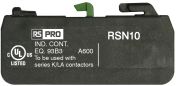
Auxiliary contact blocks are designed for easy integration with main contactors. Snap-on types typically attach directly to the front or side of the contactor without tools, offering quick installation and removal.
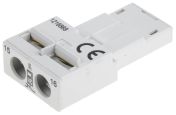
Plug-in types also provide ease of connection, often through specific slots or terminals on the contactor body. Both methods ensure a secure and reliable mechanical link that guarantees synchronous operation with the main device.
How to Choose the Right Auxiliary Contact
When selecting an auxiliary contact, consider the following:
- NO Or NC Configuration: Does your application require a signal during activation (auxiliary contact NO) or when deactivated (auxiliary contact NC)?
- Voltage/Current Rating: Ensure the auxiliary contactor can handle the intended signal load, even if low-voltage.
- Compatibility: Match the contactor’s make and model to ensure mechanical fit and electrical functionality.
- Mounting And Terminals: Choose side-mounted or front-mounted types based on panel layout. Confirm terminal types align with your wiring preferences.
- Contact Quantity: Need multiple signals? Go for multi-contact blocks such as auxiliary contact NO NC configurations (e.g. 1 NO + 1 NC).
Order Auxiliary Contacts And More From RS Hong Kong Online Today
RS provides a diverse selection of competitively priced, high-quality auxiliary contacts from renowned brands like Siemens, Schneider Electric, and Lovato.
Browse auxiliary contacts and other related products — including industrial temperature probes, electronic circuit breakers, and industrial accessories — on the RS Hong Kong website. For delivery times and shipping details, please visit our delivery page.