Temperature Calibrators
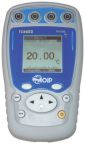
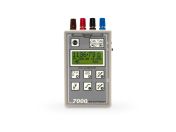
Temperature calibrators are precision instruments engineered to verify, adjust, and maintain the accuracy of temperature sensors and systems. Depending on the use case, they range from compact handheld temp calibrators for lab use to rugged drywell calibrators designed for field applications, offering a stable and controlled heat source.
This flexibility allows engineers and technicians to perform quick and accurate calibration—whether on a production line or at a test bench—helping reduce downtime and maintain operational efficiency. Investing in the right temperature calibration device ensures optimal performance, streamlined workflows, and continued compliance with industry standards.
How Temperature Calibrators Work
Temperature calibration involves comparing a device's reading against a known, stable reference temperature to verify accuracy. A temperature calibrator provides this reference point, allowing engineers and technicians to adjust or validate the performance of sensors and instruments.
Depending on design, temperature calibrators function in one or more of the following ways:
- Source Mode: Simulate a known temperature signal to test the input response of the connected instrument.
- Measure Mode: Accurately measure output signals from temperature devices.
- Dual Mode: Capable of both simulating and measuring for two-way verification.
Common features of temperature calibration devices include:
- High temperature stability
- Fast heat-up and cool-down times
- Compatibility with thermocouples, RTDs, and other sensors
- Compact, rugged designs for industrial use
Used widely by metrologists and maintenance engineers, these tools are critical in ensuring equipment reliability in sectors like manufacturing, energy, and pharmaceuticals.
Types Of Temperature Calibrators
When selecting a temperature calibrator, it’s helpful to consider the temperature range, the chemical resistance of the calibrator, and overall vibration and abrasion resistance. The most common calibrators are Thermocouple, Drywell, and RTD, each of which is suitable for a different temperature range.
The commonly used types of temperature calibration devices in industries include the following:
Thermocouple Calibrator
Thermocouple calibrators are specifically designed for calibrating devices that use thermocouples as input signals. This includes a wide range of instruments such as meters, controllers, transmitters, data loggers, and recorders. These calibrators simulate or measure the millivolt output of a thermocouple, allowing for precise adjustments and verification of the connected equipment.
Drywell Calibrator
A drywell calibrator (also known as a dry block calibrator) is an ideal solution for checking and calibrating various temperature sensors, including dial gauges, digital thermometers, bulb switches, and other sensors that require calibration below ambient temperature or at specific set points. They provide a stable and uniform temperature environment within a metal block, offering excellent accuracy and quick stabilisation times.
RTD Calibrator
An RTD (Resistance Temperature Detector) calibrator is used for testing, calibrating, and documenting the performance of an RTD transmitter or any device that relies on an RTD for temperature measurement. These calibrators provide precise resistance values that simulate the output of an RTD, allowing for accurate verification and adjustment of the connected instrumentation.
Benefits Of Using A Temperature Calibrator
Industrial environments demand accuracy and uptime — and temperature calibrators deliver on both fronts:
- Assured Accuracy: Regular calibration ensures instruments remain within tolerances, essential for product consistency and safety.
- Regulatory Compliance: Maintain conformance with ISO 9001, GMP, HACCP, or industry-specific quality frameworks.
- Operational Efficiency: Reduce equipment downtime through on-site calibration without removing instruments from service.
- Cost Savings: Avoid outsourcing fees and lead times with in-house calibration capabilities.
- Product Integrity: In temperature-sensitive industries like food, pharma, and biotech, calibration prevents spoilage or batch failures.
Using a temperature sensor calibrator helps ensure long-term reliability while allowing you to buy temperature calibrator solutions tailored for your specific industry needs.
Applications Of Temperature Calibrators
Temperature calibrators are indispensable across a wide array of industries and applications where accurate temperature measurement is critical for safety, quality, and efficiency.
Process Industries
Temperature control is critical in chemical, pharmaceutical, oil & gas, and food & beverage industries. Temperature calibrators guarantee sensor accuracy in various equipment, vital for product quality, process efficiency, and safety.
Manufacturing And Production
Accurate temperature control is essential in manufacturing, from automotive to electronics, for processes like heat treatment and testing. Thermal calibrators ensure the precision of temperature sensors in equipment like furnaces, kilns, and environmental chambers, maintaining manufacturing integrity.
HVAC And Building Management
Accurate temperature sensors are crucial for energy efficiency and occupant comfort in Heating, Ventilation, and Air Conditioning (HVAC) and building management systems. Technicians use temperature calibrators to calibrate thermostats, environmental sensors, and control systems, ensuring efficient operation and comfortable indoor environments.
Research And Development
Laboratory experiments and testing rely on precise temperature measurements. Temperature calibration devices are essential for accurate lab equipment, reliable research data, and reproducible experiments.
Environmental Monitoring
Precise temperature readings are crucial for environmental monitoring, including weather, climate studies, and perishable goods logistics. Temperature calibrators guarantee sensor accuracy, which is essential for protecting public health and product quality.
How To Choose The Right Temperature Calibrator
Selecting the appropriate temperature calibrator is crucial for ensuring accurate and efficient calibration. Several factors should be considered to match the calibrator to your specific needs.
- Sensor Type: Match the calibrator to your DUT (e.g. thermocouple or RTD).
- Temperature Range: Ensure full coverage of operational limits.
- Accuracy Requirements: Choose high-precision models for R&D or regulated environments.
- Environmental Conditions: For field use, prioritise durability, portability, and battery life.
- Functionality: Select between source-only, measure-only, or dual-mode calibrators.
- User Interface: Look for models with intuitive navigation, clear displays, and robust casing.
When evaluating temperature calibrator price points, balance your budget with required features, traceability, and compliance. Investing in the right thermal calibrator ensures long-term operational integrity.
Order Temperature Calibrators And More From RS Hong Kong Online Today
RS offers a wide range of competitively priced, top-tier industrial network hubs from leading manufacturers like Fluke calibration, Time Electronics, and RS PRO.
Beyond network hubs, we also stock a variety of tools like calibration weights, electronic loads and K type temperature probes to help you optimise your industrial setups. Snag these and other crucial accessories directly from our online store today. Delivery details and fees are available on our delivery page.