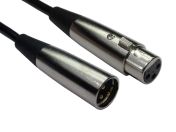
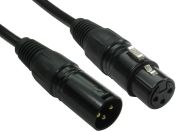
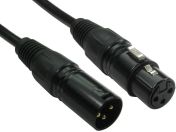
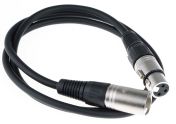
XLR Cables
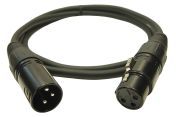
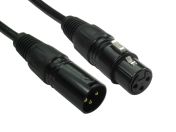
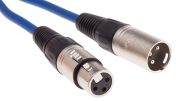
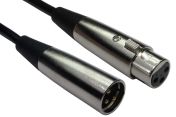
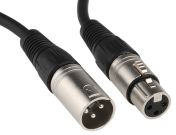
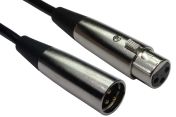
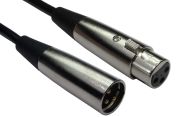
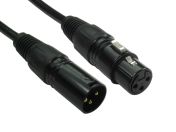
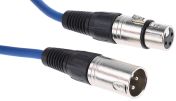
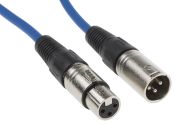
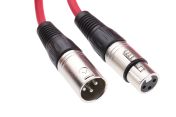
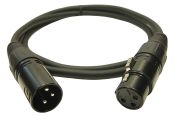
XLR cables, also known as XLR cord, are the industry-standard interconnect in professional audio, engineered to carry balanced audio signals with high noise rejection and consistent signal integrity across long cable runs. The term XLR stands for External Line Return and refers to the type of connector used on the cable. XLR cables are designed to carry balanced audio signals, which means they can effectively transmit audio while minimizing noise and interference.
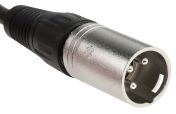
Every professional XLR cable operates on a three-conductor, shielded design. The 3 pin XLR cable configuration assigns one pin to ground and two pins to carry the same audio signal in opposing polarity. This balanced architecture enables common-mode noise rejection: any interference induced along the cable length is cancelled at the receiving end, preserving signal quality even over extended runs. Cable shielding provides a secondary layer of protection against electromagnetic interference (EMI) and radio frequency interference (RFI).
Beyond audio transmission, XLR audio cables also carry DMX512 signals for stage and event lighting control. Available across a wide range of lengths, balanced XLR cables suit applications from compact studio configurations to full-scale live production environments.
Types of XLR Cables
XLR audio cables are manufactured in several wiring configurations to suit different signal paths and equipment standards. Selecting the correct type depends on connector compatibility, signal balance requirements, and the specific devices being interconnected.
XLR to XLR Cables
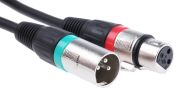
The XLR to XLR cable is the primary configuration in professional audio, terminated with male and female XLR connectors at each end to maintain a fully balanced signal path throughout. Used as both an XLR microphone cable and a general-purpose XLR cord, this configuration handles microphone-to-console connections, amplifier drive feeds, and stage box interconnects, making it the standard XLR lead specified for live sound reinforcement and studio recording applications in Hong Kong and globally.
XLR to TRS Cables
XLR to TRS cables connect XLR-terminated devices to equipment using 6.35mm Tip-Ring-Sleeve jack connectors whilst retaining a balanced signal path at both ends. This configuration is commonly specified for interfacing microphone preamplifiers, audio interfaces, and outboard processing units in studio environments where mixed connector standards need to be bridged without compromising signal quality or headroom.
XLR to RCA Cables
The XLR to RCA cable provides a connection between professional balanced equipment and consumer audio devices using RCA phono connectors. This configuration involves a conversion from balanced to unbalanced signal, making it suitable for controlled, short-run applications such as feeding a console output into a consumer amplifier or recording device where noise pick-up is manageable.
Applications of XLR Cables
XLR audio cables are specified across a wide range of professional audio and production disciplines. Below are the primary application areas where these cables are deployed.
- Microphones: XLR cables provide the standard balanced connection between dynamic and condenser microphones and downstream equipment such as mixing consoles, preamplifiers, and audio interfaces, with the cable also serving as the transmission path for 48V phantom power.
- Live Sound Systems: In touring productions, concerts, and conferences, XLR leads carry signal from stage to front-of-house across extended cable runs, interconnecting microphones, DI boxes, stage boxes, and powered loudspeakers without measurable signal degradation.
- Studio Recording: Professional XLR cables are the standard interconnect in recording studios, used throughout signal chains to connect microphones, preamplifiers, compressors, equalisers, and audio interfaces within both inline and patch bay configurations.
- PA Systems: Public address installations in theatres, houses of worship, and stadiums rely on balanced XLR cables to distribute clean audio from source through amplification to speaker systems, maintaining consistent signal levels throughout the signal path.
- Broadcast and Television: In broadcast studios, newsrooms, and on-location production, XLR microphone cables connect microphones, audio consoles, intercom systems, and IFB feeds where signal reliability and low-noise performance are critical operational requirements.
- DJ Equipment: Professional DJ setups use XLR connections to route balanced outputs from mixers and media players to amplifiers and powered loudspeakers, reducing noise susceptibility in high-gain signal environments.
- Stage Lighting: XLR cables transmit DMX512 digital control signals between lighting controllers and fixtures, functioning as a dual-purpose cable type used across both audio and lighting control infrastructure in live production rigs.
Buy XLR Cables from RS Hong Kong
RS Hong Kong is a trusted XLR cable supplier stocking a curated range of professional XLR cables from leading brands including our very own RS PRO and Van Damme, covering everything from standard XLR to XLR cables to specialist configurations for studio and live production use.
As a one-stop procurement source for audio and AV infrastructure, RS also carries complementary products including Optical Audio Cables, Audio Cables as well as HDMI Cables so engineers and procurement teams can fulfil multiple requirements in a single order. All products are available with reliable local delivery across Hong Kong. Browse the full range and order your XLR audio cable online today. For more information on delivery options and fees, refer to our Delivery Page.