Cable Trays
Cable trays are a type of cable management system used to support and organise electrical cables and wires in commercial, industrial, and residential settings. They are typically made of metal, such as steel or aluminium, and are designed to provide a safe and efficient way to route and protect cables. Cable trays consist of a series of interconnected channels, or trays, that form a pathway for cables. They are designed to hold and support power cables, data cables, and communication cables. Meanwhile, cable management trays are used in larger installations, while cable tray systems provide a structured pathway for multiple cable management trays and other cable management solutions.
Benefits Of Cable Trays
- Cable Protection: The trays provide a protective enclosure for cables, shielding them from physical damage, moisture, and other environmental factors.
- Easy Installation: Cable trays are easy to install and can be easily adapted for layouts and configurations needed for your application.
- Cable Accessibility: Cable trays allow easy access to cables for maintenance and modifications. Sufficient clearance must be maintained for future inspection and maintenance purposes, thanks to guidelines on tray placement.
- Improved Cable Management: Cable trays help to organise and group different types of cables, reducing the risk of tangling or interference between them.
- Enhanced Airflow: Open-style cable trays promote better airflow around cables, reducing heat build-up and improving the overall cooling efficiency of the electrical system.
Types Of Cable Trays
Ladder Cable Trays
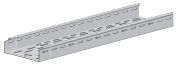
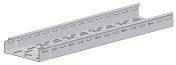
These trays feature side rails with rungs, providing maximum airflow to prevent heat buildup and making it easy to terminate cables at any point. They are ideal for heavy-duty power cables and applications requiring frequent cable additions or changes.
Wire Mesh Cable Trays
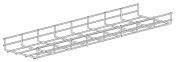
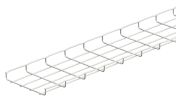
Constructed from welded wire mesh, these trays offer excellent ventilation, flexibility for on-site fabrication, and a lightweight design. They are commonly used for data and communication cables due to their ease of installation and ability to accommodate future cabling needs.
Basket Cable Trays
Similar to wire mesh cable trays but with a more robust construction, basket cable trays offer good ventilation and support for various cable types. Their open design simplifies cable routing, inspection and maintenance. They are often found in commercial and industrial environments.
Single Rail Cable Tray
Also known as spine or mono-rail trays, these feature a central support rail with arms extending outwards to hold cables. They are highly flexible and offer a clean aesthetic, making them suited for complex routing. They are often used in overhead applications, or where space is limited.
How Cable Trays Work
Cable trays work by forming a continuous, rigid support system that cradles and elevates electrical cables and communication cables. They guide cables along designated routes on walls, ceilings, or raised platforms. This open design offers significant installation flexibility for routing, simplifies maintenance and future modifications by allowing easy access, and provides passive protection against physical damage, interference and clutter. Cable trays are available in a variety of sizes and are modular systems that allow for easy scaling up and down, via the addition or subtraction of cable racks and trays.
Applications
Industrial Settings
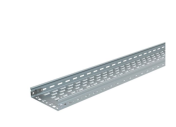
Heavy-duty ladder and perforated cable trays are widely used to support and protect large power cables and control wiring from harsh environmental conditions, chemicals, and physical damage, ensuring reliable operation of machinery.
Data Centers
Wire mesh and basket cable trays are preferred for their excellent ventilation and flexibility, facilitating the organised routing of numerous data and fibre optic cables, preventing overheating, and simplifying modifications.
Commercial Buildings
Perforated and solid bottom electrical cable trays, along with single-rail systems, are employed to discreetly manage electrical and communication wiring within walls, ceilings, and under raised floors, maintaining a neat appearance while ensuring safety and easy access for maintenance.
Manufacturing Facilities
Robust ladder and solid bottom trays are crucial for routing and protecting power and control cables to various production lines and machinery, with perforated options providing ventilation in areas prone to heat, ensuring continuous operation.
Construction Sites
Temporary wire mesh or basket cable trays, alongside more heavy-duty ladder trays for permanent installations, are used to safely manage and organise power, lighting, and communication cables across the site, minimising trip hazards and adapting to evolving layouts.
How To Choose The Right Cable Tray
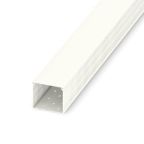
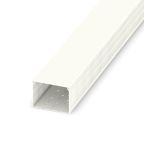
Selecting the right cable tray begins with assessing environmental factors, load capacity and material strength. For example, steel wire cable trays offer a good mix of strength and ventilation, while plastic or PVC cable trays are corrosion-resistant and suited for lighter loads.
Ease of installation should also be considered, with available space and accessibility for modifications taken into account. Larger cable trays and rack sizes will be needed for data centers, industrial facilities, and office buildings.
For heavy-duty use cases, the deflection limits of cable trays and ladders should be considered. This tells us the degree to which a cable rack, ladder and their supports can be displaced under a load without causing damage. Defined as fractions of the span length, deflection limits define the safe working loads that cable racks and cable management trays can bear without suffering structural problems.
How To Order Cable Trays From RS Hong Kong
RS Hong Kong is your reliable source of electrical cable trays, heavy-duty cable ladders and cable management trays. We are also the distributor and supplier of products from industry leaders such as Cablofil International, StarTech.com and Rittal. We also carry cable management peripherals such as cable grommets and cable markers. Buy cable trays online by browsing our extensive range, adding to cart and check out.
For more information on our delivery services, please visit our delivery page.








Related links
- Cable Tray Accessories
- Rittal Sheet Steel Cable Tray Cable Tray for Use with TE 8000 Series, VX IT Series
- MECATRACTION Cable Tray Accessory Stainless Steel Cable Tray Accessory
- Legrand Swiftclip Hot Dipped Galvanised Steel Cable Tray Accessory, 300mm Width
- RS PRO Elbow Sendzimir Galvanised Steel Cable Tray Accessory 60 mm Depth
- Cablofil International Support Rail Pre-Galvanised Steel Cable Tray Accessory 22 mm Depth
- Legrand Heavy Duty 90° Flat Bend Hot Dipped Galvanised Steel Cable Tray Accessory 50 mm Depth
- StarTech.com, Steel 105 mm x 12mm x 207 mm