SATA Cables
SATA, short for Serial Advanced Technology Attachment, is a connector interface linking a host bus adapter to a mass storage device. This technology replaced older PATA (Parallel ATA) interfaces.
Also known as Serial ATA cables, SATA cables offer faster data transfer and support hot-plugging. They also use smaller cables than their PATA predecessors, which improves airflow inside a computer case, and provides an external interface.
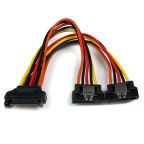
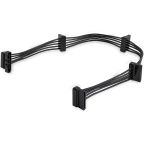
SATA cables typically come with either 7-pin (data) or 15-pin (power) connectors. Some SATA cables can also power split, enabling connection of one port to two devices.
Types of SATA Cables for Data and Power Connections
SATA Data Cables
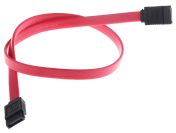
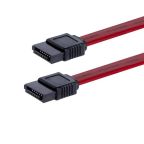
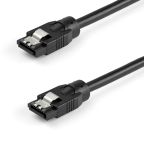
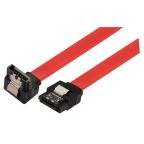
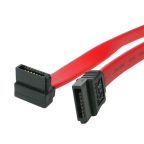
SATA data cables are thin, flat cables are essential for high-speed data transfer between a storage device and a computer's motherboard or host adapter. They typically feature 7-pin connectors on both ends.
SATA Power Cables
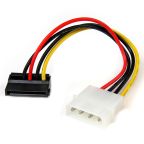
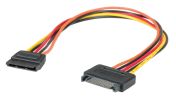
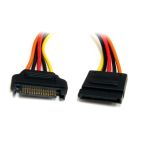
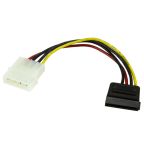
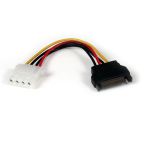
SATA power cables are responsible for delivering electrical power from the power supply unit to SATA storage devices. They feature a distinct 15-pin connector that supplies +3.3V, +5V, and +12V DC.
Combo SATA Cables
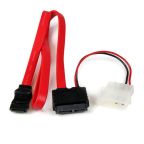
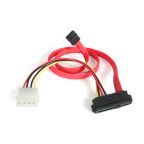
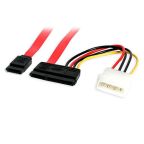
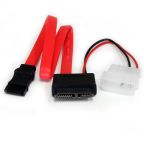
Combo SATA cables integrate both data and power functions into a single connector, typically featuring 22 pins (7 data + 15 power). This design simplifies connections and significantly reduces cable clutter, making them ideal for compact setups like external hard drive enclosures.
SATA 3 Cables
SATA 3 cables refer to those compliant with the SATA 3.0 revision standard, offering a high data transfer speed of up to 6 Gb/s (600 MB/s). While backward compatible with older SATA I and II devices, these cables are crucial for maximising the performance of modern Solid State Drives (SSDs).
Key Benefits of Using SATA Cables
High-Speed Data Transfer
SATA cables are designed for impressive data transfer speeds. Older generations typically start around 150MBps and go up to 300MBps. However, newer generation SATA cables, such as those compliant with SATA 3.0, can offer speeds of around 6Gbps.
Reliable Point-To-Point Connections
SATA data cables create a dedicated, direct point-to-point connection between individual storage devices and the host bus adapter. This direct link minimises signal interference and ensures consistent data flow.
Broad Compatibility
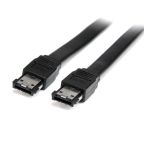
SATA cables boast wide compatibility, including internal hard drives, Solid State Drives (SSDs), and optical drives. Newer generation eSATA cables also provide an external interface, enabling compatible devices to connect externally to SATA systems.
Flexible Lengths and Durable Build
SATA cables use smaller, more flexible cables than their predecessors, improving airflow and simplifying cable management inside computer cases.
The 15-pin power connector also contributes to their durable build, designed for reliable power delivery. You can also find SATA cables in various lengths, including options like 1-meter SATA cables for extended reach within or outside a system.
Hot Plugging Support
A significant benefit of SATA cables are its support for hot plugging. This feature allows devices to be connected or disconnected while the computer system is running, providing greater flexibility for system upgrades, maintenance, and troubleshooting without requiring a full shutdown.
Applications and Uses of SATA Cables
SATA cables serve as versatile connectors across a broad spectrum of devices and systems:
- Connecting Internal Hard Drives (HDDs) to the Motherboard: SATA cables are the standard for linking traditional HDDs to the computer's motherboard.
- Powering or Transferring Data to Solid-State Drives (SSDs): These cables are crucial for both powering and transmitting high-speed data to SSDs.
- Linking Optical Drives like DVD or Blu-ray Drives: SATA cables provide the necessary connections for optical disk drives, allowing users to read, write, and play various media formats.
- Used in Desktop PCs, Servers, and NAS Systems: SATA cables are integral to the architecture of desktop computers, and widely deployed in server environments and Network Attached Storage (NAS) systems.
- Compatible with Hot-Swappable Storage Enclosures: The design of SATA connections, including their hot-plugging support, makes them ideal for use with hot-swappable drive bays and external storage enclosures, allowing drives to be added or removed without system shutdown.
How to Choose the Right SATA Cable
Selecting the right SATA cable is crucial for optimising your system's performance and ensuring reliable data transfer. Consider these factors:
Cable Type
SATA cables are broadly categorised into data cables and power cables.
Data cables (7-pin) transmit information between your storage device and motherboard, while power cables (15-pin) supply the necessary electrical power from your power supply unit. It's essential to identify whether you need a data cable, a power cable, or a combo cable that integrates both functions.
Connector Style
SATA cables come with various connector styles to suit different installation needs. Standard straight connectors are common, but angled connectors (left-angled or right-angled) are highly beneficial for managing cables in tight spaces within a computer case.
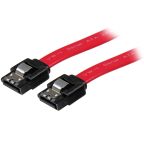
Some cables also feature latching connectors for a more secure connection, preventing accidental disconnections.
Data Speed Requirements
The data transfer speed of a SATA cable depends on its revision. SATA I offers 1.5 Gb/s (150 MB/s), SATA II provides 3 Gb/s (300 MB/s), and SATA III supports up to 6 Gb/s (600 MB/s).
For optimal performance, especially with high-speed SSDs, ensure your cable supports the highest SATA version compatible with your drive and motherboard.
Compatibility
Always verify the compatibility of the SATA cable with both your storage device and your motherboard. While newer SATA III cables are generally backward compatible with older SATA I and II devices.
Also, consider specialised versions like eSATA for external connections or mSATA for smaller devices.
Adapters/Converters
In some cases, you might need adapters or converters. For example, a SATA to USB adapter can turn an internal SATA drive into an external USB drive for easy data transfer. Power adapters might also be necessary if your power supply unit lacks native SATA power connectors.
Buy SATA Cables from RS
Shop with confidence at RS Hong Kong, where you'll find a wide selection of high-quality SATA cables at competitive prices from trusted brands like StarTech.com, Roline, and L-Com. Discover our full online range to find the perfect SATA cables, thunderbolt cables, or USB adaptors your data transfer, connectivity, and system upgrade needs.
To complete your purchase, simply add your desired products to your cart and proceed to our secure, easy-to-use checkout. We provide numerous flexible payment solutions for your convenience. For all the specifics regarding our delivery services please refer to our dedicated Delivery Information page.
Popular Searches
Related links
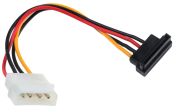
- Roline Male SATA to Female 4 Pin HDD SATA Cable, 200 mm
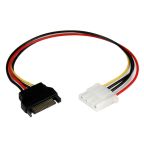
- StarTech.com Male LP4 to Female SATA Power SATA Cable, 6 in
- Roline Male SATA to Male SATA SATA Cable, 500 mm
- StarTech.com Male Female SATA Power SATA Cable, 152.4 mm
- StarTech.com Male Female SATA Power SATA Cable, 304.8 mm
- StarTech.com Male SATA to Female Straight SATA Cable, 150 mm
- StarTech.com Female SATA to Female Straight SATA Cable, 450 mm
- StarTech.com Female SATA to Female Straight SATA Cable, 203.2 mm